

Sustainable Living
Resilient by Design: Efficiency, Insurance and Value in South Florida Homes
By Flavia Arruda Salinas · May 22, 2026
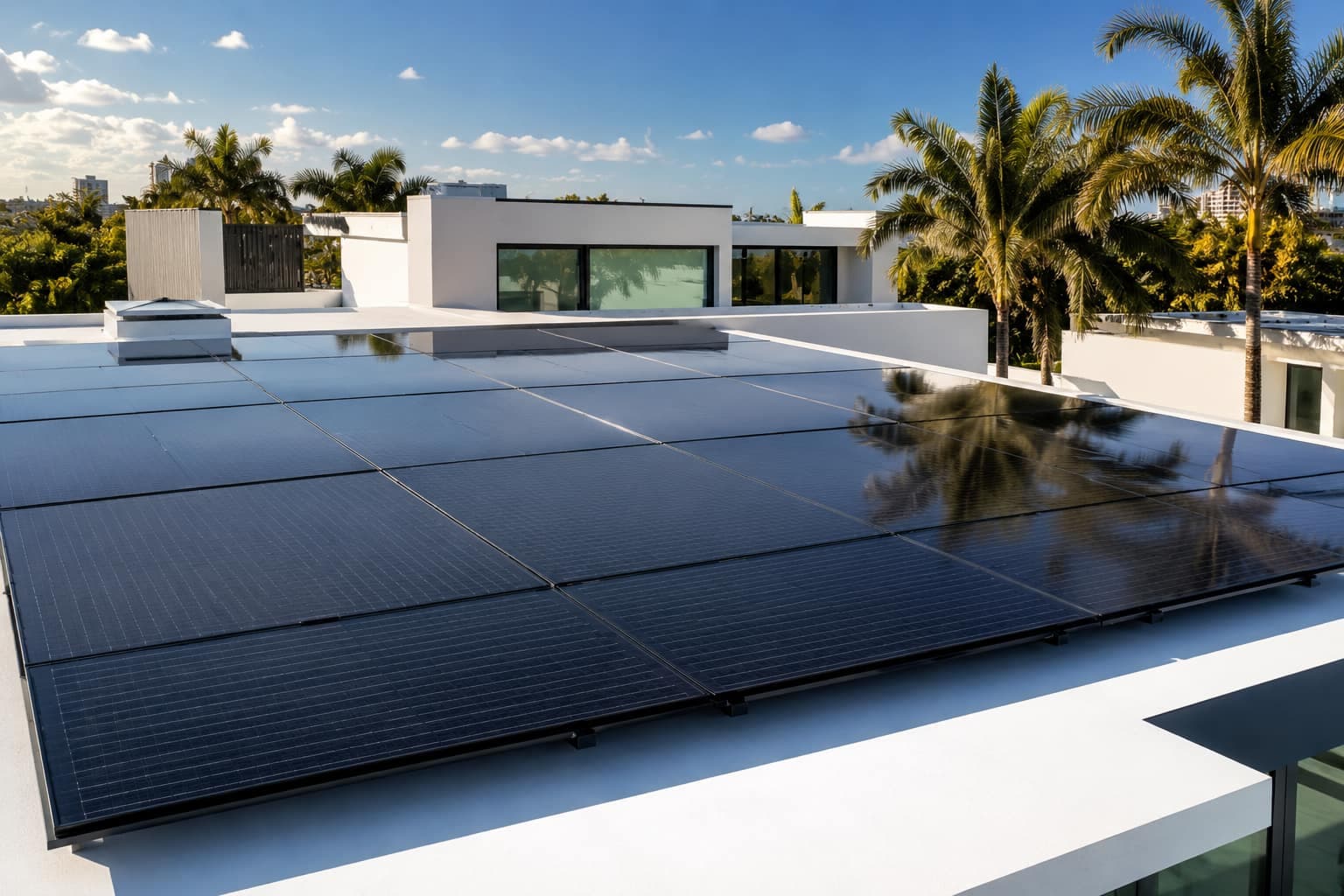
In South Florida, sustainability is rarely the first word a client uses. They tend to talk about insurance, operating cost and how a property will hold its value through the next decade. Yet those conversations point to the same set of systems, the ones that make a coastal home efficient and resilient at the same time. Treated as a financial subject rather than a sentiment, resilience becomes one of the more rational lenses through which to evaluate a luxury home here.
Why coastal resilience is a financial conversation
A home near the water carries a different risk profile than one inland, and the market prices that difference. Wind exposure, salt, humidity and storm season all shape what it costs to insure and operate a property over time. When a residence is built or upgraded to perform under those conditions, rather than merely to look the part, it tends to be easier to underwrite and less expensive to run. For an owner planning to hold, that quiet difference compounds. For an investor, it is part of the carrying cost that determines whether a property pencils out.
The systems that actually move the needle
Resilience and efficiency overlap more than most buyers expect. Impact-rated glazing protects the envelope and improves comfort while reducing the load on cooling. A well-specified roof, properly fastened and documented, is central to both storm performance and insurability. Solar with battery backup addresses outage risk and energy cost together. High-efficiency HVAC, thoughtful water systems and native, drought-tolerant landscaping round out a home that is calmer to own.
Efficiency and resilience are not competing goals here. The same upgrades that lower operating cost are often the ones that keep a coastal home insurable.
I phrase the savings qualitatively on purpose. The magnitude depends on the specific home, its age and how each system was installed, so I would rather a client model real numbers than chase a headline figure.
What buyers should verify during due diligence
A resilient home is only as good as its documentation. During the inspection and contingency window, I want to see permits closed out for major work, the wind-mitigation report, the roof's age and installation records, and confirmation that solar, glazing and mechanical systems were installed to code. Tight inspection deadlines exist precisely so these questions get answered before the contingency expires, not after closing, when leverage is gone. If something is undocumented, that is not necessarily a problem; it is a negotiating point and a task list.
What sellers should prepare before listing
Sellers often hold the value of these systems in a drawer and never show it. Before a property goes live, I help owners assemble the paper trail: permits, the wind-mitigation certificate, warranties, the roof's history and any energy or efficiency records. A well-documented home moves through underwriting and inspection with fewer surprises, and surprises are what erode price near the finish line. Presenting resilience as verifiable fact, rather than a claim, is one of the quieter ways to protect a seller's number.
Structuring an investment around resilient assets
For investors, resilience belongs in the underwriting model from the first showing. Insurability and operating cost are not afterthoughts; they shape net yield and exit value. Where ownership runs through an LLC, the structure should be set up with a real estate attorney and reviewed with a CPA, and the name on title should align with the account funding the purchase. These are educational guardrails, not advice, but they are the questions a serious investor asks before, not after, the contract is signed.
Where this market is heading
Coastal South Florida is steadily rewarding homes that perform under pressure, and that direction is unlikely to reverse. Buyers, sellers and investors who treat efficiency and resilience as financial inputs, verified, documented and modeled, are better positioned for whatever the next season brings. When you are ready to evaluate a specific property through that lens, I am glad to walk the systems with you, line by line.